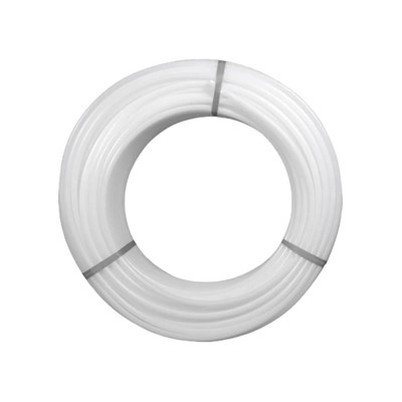
What are the quality inspection indicators of Pex heating pipe?
Leave a message

As a supplier of Pex heating pipes, I understand the importance of quality inspection in ensuring the reliability and performance of our products. Pex heating pipes are widely used in various heating systems due to their flexibility, durability, and resistance to corrosion. In this blog post, I will discuss the key quality inspection indicators of Pex heating pipes to help you understand what to look for when choosing a Pex heating pipe supplier.
1. Material Quality
The quality of the raw material used to manufacture Pex heating pipes is the foundation of their performance. Pex, or cross-linked polyethylene, is a high - performance plastic material. The base resin should have high purity and appropriate molecular weight distribution.
-
Cross - linking Degree: One of the most critical factors is the cross - linking degree of the Pex material. Cross - linking enhances the pipe's mechanical properties, heat resistance, and chemical resistance. There are different methods of cross - linking, such as peroxide cross - linking (PE - Xa), silane cross - linking (PE - Xb), and radiation cross - linking (PE - Xc). For high - quality Pex heating pipes, a proper cross - linking degree should be achieved. Usually, the cross - linking degree of PE - Xa pipes is required to be above 70%. This high cross - linking degree ensures that the pipes can withstand high temperatures and pressures without significant deformation. You can learn more about the quality standards related to cross - linking in PE - Xa Pipe ISO15875.
-
Resin Purity: The resin used in Pex pipe production should be free from impurities. Impurities can weaken the pipe's structure and reduce its lifespan. During the quality inspection, we use advanced testing equipment to detect any foreign particles or contaminants in the resin. High - purity resin ensures the pipe's long - term stability and reliability.
2. Dimensional Accuracy
Accurate dimensions are crucial for the proper installation and performance of Pex heating pipes. Any deviation from the standard dimensions can lead to installation difficulties and potential leakage problems.
-
Outer Diameter and Wall Thickness: The outer diameter and wall thickness of Pex heating pipes must be within the specified tolerance range. For example, if the nominal outer diameter of a pipe is 20mm, the actual outer diameter should be within a certain tolerance, say ±0.3mm. Similarly, the wall thickness should also be consistent along the length of the pipe. Inconsistent wall thickness can cause uneven stress distribution when the pipe is under pressure, which may lead to premature failure. We use precision measuring tools, such as calipers and micrometers, to measure the outer diameter and wall thickness of each pipe during the production process.
-
Length: The length of Pex heating pipes should also be accurate. Most pipes are produced in standard lengths, such as 50m or 100m. The actual length should be within a small tolerance range, usually ±0.5%. This ensures that customers receive the correct amount of pipe material for their projects.
3. Pressure Resistance
Pex heating pipes are designed to operate under a certain pressure. Therefore, pressure resistance is a key quality inspection indicator.


-
Hydrostatic Pressure Test: We conduct hydrostatic pressure tests on Pex heating pipes to evaluate their pressure - bearing capacity. In this test, the pipe is filled with water and subjected to a specified pressure for a certain period. For example, a Pex heating pipe may need to withstand a pressure of 10 bar for 100 hours at a temperature of 95°C without any leakage or deformation. This test simulates the actual working conditions of the pipe in a heating system.
-
Burst Pressure: In addition to the hydrostatic pressure test, we also measure the burst pressure of the pipes. The burst pressure is the maximum pressure that the pipe can withstand before it ruptures. A high - quality Pex heating pipe should have a burst pressure significantly higher than its normal operating pressure. This provides a safety margin and ensures the reliability of the heating system.
4. Temperature Resistance
Pex heating pipes are exposed to high temperatures in heating systems, so temperature resistance is an important quality factor.
-
Thermal Stability: The pipes should have good thermal stability, which means they can maintain their mechanical properties at high temperatures. We test the pipes at different temperature ranges to ensure that they do not soften or deform under normal operating temperatures. For example, in a central heating system, the water temperature can reach up to 80 - 90°C. The Pex heating pipes should be able to withstand these temperatures without losing their shape or strength.
-
Thermal Expansion Coefficient: The thermal expansion coefficient of Pex heating pipes is also an important consideration. A low thermal expansion coefficient means that the pipe will expand and contract less when the temperature changes. This reduces the stress on the pipe joints and fittings, minimizing the risk of leakage.
5. Chemical Resistance
Pex heating pipes may come into contact with various chemicals in the heating system, such as water treatment agents and additives. Therefore, chemical resistance is necessary to ensure the long - term performance of the pipes.
-
Resistance to Corrosion: The pipes should be resistant to corrosion caused by water and other substances in the heating system. We test the pipes by exposing them to different chemical solutions to evaluate their corrosion resistance. For example, in a water - based heating system, the pipes should be able to resist the corrosion of dissolved oxygen and other impurities in the water.
-
Resistance to Chemical Additives: In some heating systems, chemical additives are used to prevent scale formation and microbial growth. The Pex heating pipes should be able to withstand the presence of these additives without being damaged.
6. Surface Quality
The surface quality of Pex heating pipes can affect their installation and performance.
-
Smoothness: The outer surface of the pipe should be smooth without any scratches, cracks, or bumps. A smooth surface not only makes the pipe easier to install but also reduces the risk of damage during handling. We use visual inspection and surface roughness measurement tools to ensure the smoothness of the pipe surface.
-
Color Consistency: The color of the Pex heating pipes should be consistent. Inconsistent color may indicate problems in the production process or the presence of impurities. A uniform color is also important for aesthetic reasons, especially in applications where the pipes are visible.
7. Marking and Identification
Proper marking and identification on Pex heating pipes are essential for traceability and installation guidance.
-
Product Information: The pipes should be marked with important product information, such as the brand name, pipe size, cross - linking type, and production date. This information helps customers identify the product and ensure that they are using the correct pipe for their application.
-
Installation Instructions: Some pipes may also be marked with installation instructions, such as the recommended bending radius and connection methods. This helps installers to correctly install the pipes and avoid potential installation errors.
In conclusion, as a Pex heating pipe supplier, we pay great attention to these quality inspection indicators to ensure that our products meet the highest standards. By strictly controlling the material quality, dimensional accuracy, pressure resistance, temperature resistance, chemical resistance, surface quality, and marking, we can provide our customers with reliable and high - performance Pex heating pipes.
If you are interested in purchasing Pex heating pipes or have any questions about our products, please feel free to contact us for further discussion. We are committed to providing you with the best solutions for your heating system needs. You can also explore more about our Pex pipe products, such as PEX Pipe for Water Supply and PE - Xa Pipe Watermark.
References
- ISO 15875 - Plastics piping systems for hot and cold water installations - Cross - linked polyethylene (PE - X) - Part 1: General
- ASTM standards related to Pex pipes