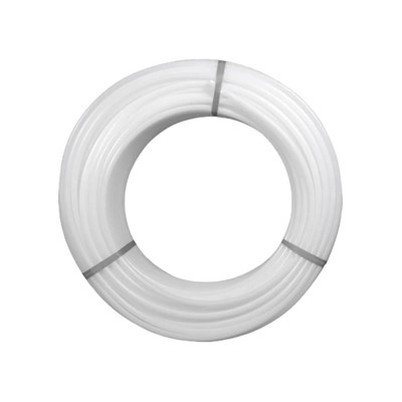
Is PERT Pipe suitable for cryogenic applications?
Leave a message

Hey there! As a PERT pipe supplier, I often get asked about the suitability of PERT pipes for cryogenic applications. So, I thought I'd sit down and share my thoughts on this topic.
First off, let's talk a bit about what PERT pipes are. PERT, or Polyethylene of Raised Temperature resistance, is a type of plastic pipe that's known for its flexibility, durability, and resistance to high temperatures. It's commonly used in heating systems, hot and cold water supply, and underfloor heating. But can it handle the extreme cold of cryogenic applications?


Understanding Cryogenic Applications
Cryogenic applications involve working with extremely low temperatures, typically below -150°C (-238°F). These applications are found in various industries, such as medical, aerospace, and food processing. In the medical field, cryogenic temperatures are used for storing biological samples, like sperm, eggs, and stem cells. In aerospace, cryogenic fuels, like liquid hydrogen and oxygen, are used to power rockets. And in the food industry, cryogenic freezing is used to preserve food products.
Properties of PERT Pipes
PERT pipes have several properties that make them attractive for many applications. They're lightweight, which makes them easy to handle and install. They're also corrosion-resistant, which means they won't rust or corrode over time. Additionally, PERT pipes have good chemical resistance, which allows them to be used with a wide range of fluids.
However, when it comes to cryogenic applications, the low-temperature properties of PERT pipes become a crucial factor. At extremely low temperatures, plastics can become brittle and lose their flexibility. This can lead to cracking and failure of the pipes, which can be a serious safety hazard in cryogenic systems.
PERT Pipes in Cryogenic Conditions
The main concern with using PERT pipes in cryogenic applications is their impact resistance at low temperatures. As the temperature drops, the molecular structure of PERT changes, and it becomes more rigid. This increased rigidity can make the pipes more susceptible to cracking when subjected to mechanical stress, such as vibration or impact.
Another issue is the thermal expansion and contraction of PERT pipes. At cryogenic temperatures, the pipes will contract significantly. If the system is not designed to accommodate this contraction, it can cause stress on the pipes and their joints, leading to leaks or failures.
But it's not all bad news. Some PERT pipes are specifically formulated to have better low-temperature performance. These pipes are often made with special additives that improve their impact resistance and flexibility at low temperatures. However, even these modified PERT pipes have their limits.
Case Studies and Research
There have been some studies and real-world applications that have explored the use of PERT pipes in low-temperature environments. In some cases, PERT pipes have been used successfully in relatively mild cryogenic applications, where the temperatures are not extremely low. For example, in some food processing plants, PERT pipes have been used for transporting chilled water at temperatures around -20°C to -30°C.
However, in more extreme cryogenic applications, such as those involving liquid nitrogen (-196°C) or liquid helium (-269°C), PERT pipes have generally not been recommended. The risk of cracking and failure is too high, and more suitable materials, such as stainless steel or copper, are typically used.
Alternatives to PERT Pipes for Cryogenic Applications
If you're working on a cryogenic project, there are several alternatives to PERT pipes that you might consider. Stainless steel pipes are a popular choice because they have excellent strength and corrosion resistance at low temperatures. They can handle the extreme cold without becoming brittle, and they're also able to withstand high pressures.
Copper pipes are another option. Copper has good thermal conductivity, which can be an advantage in some cryogenic systems. It's also relatively easy to work with and has a long history of use in plumbing and refrigeration applications.
When PERT Pipes Might Still Be an Option
Despite the challenges, there are some situations where PERT pipes could still be considered for cryogenic applications. If the cryogenic system has a relatively stable temperature and low mechanical stress, and the temperatures are not extremely low, PERT pipes might be a viable option. For example, in a small-scale laboratory setup where the temperature is maintained at around -50°C to -100°C and there is minimal vibration or impact, PERT pipes could potentially be used.
It's important to note that if you do decide to use PERT pipes in a cryogenic application, you should conduct thorough testing and evaluation. This might include testing the pipes at the expected operating temperatures and pressures, as well as simulating any mechanical stress that the pipes might be subjected to.
Conclusion
So, is PERT pipe suitable for cryogenic applications? The answer is, it depends. In most extreme cryogenic conditions, PERT pipes are not the best choice due to their potential for brittleness and cracking at low temperatures. However, in some milder cryogenic applications, especially those with stable temperatures and low mechanical stress, PERT pipes could be considered.
If you're considering using PERT pipes in a cryogenic application, I'd recommend consulting with an engineer or a specialist in cryogenic systems. They can help you evaluate the suitability of PERT pipes for your specific project and provide guidance on the best materials and design practices.
And if you're interested in PERT Tube, we're here to help. We offer a wide range of PERT pipes that are suitable for various applications. Whether you're working on a heating system, a water supply project, or even exploring the possibility of using PERT pipes in a cryogenic application, we can provide you with the information and products you need. Just reach out to us, and we can start a conversation about your project requirements.
References
- "Handbook of Plastic Pipe Engineering" by Michael W. Jansen
- "Cryogenic Engineering" by Richard W. Swift
- Industry reports on the use of plastic pipes in low-temperature applications