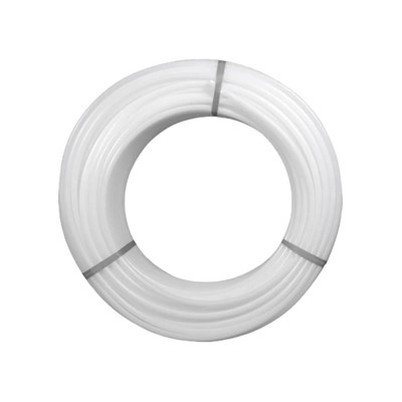
How is PEX - AL - PERT Pipe manufactured?
Leave a message

As a supplier of PEX-AL-PE RT pipes, I'm excited to share with you the detailed manufacturing process of these high - quality pipes. PEX-AL-PE RT pipes, also known as cross - linked polyethylene - aluminum - polyethylene random copolymer pipes, are widely used in various plumbing and heating systems due to their excellent performance.
1. Raw Material Preparation
The first step in manufacturing PEX-AL-PE RT pipes is to carefully select and prepare the raw materials. For the inner and outer layers, we use polyethylene random copolymer (PE RT). PE RT is a type of polyethylene that has excellent thermal stability, flexibility, and resistance to stress cracking. It can withstand a wide range of temperatures, making it suitable for both hot and cold water applications.
The middle layer is made of aluminum. Aluminum provides the pipe with high strength, good oxygen barrier properties, and dimensional stability. The aluminum strip used in the production is usually of high - quality grade, with a smooth surface and precise thickness.
In addition to these main materials, cross - linking agents are also required for the PEX layer. The cross - linking process enhances the mechanical properties and heat resistance of the polyethylene.
2. Extrusion of Inner PE RT Layer
The manufacturing process begins with the extrusion of the inner PE RT layer. The PE RT resin is fed into an extruder. Inside the extruder, the resin is heated to a molten state. The temperature and pressure are carefully controlled to ensure a uniform melt.
As the molten PE RT passes through a die, it takes on the shape of a tube. The extruder speed and the size of the die determine the diameter and wall thickness of the inner layer. Once the inner layer is extruded, it is cooled rapidly using a water cooling system. This rapid cooling helps to set the shape of the layer and improve its mechanical properties.
3. Application of Adhesive Layer
After the inner PE RT layer is cooled, an adhesive layer is applied to its outer surface. The adhesive is specifically formulated to bond the PE RT layer to the aluminum layer effectively. It is usually applied using a coating machine, which ensures a uniform and thin layer of adhesive on the inner tube.
The quality of the adhesive is crucial for the overall performance of the PEX-AL-PE RT pipe. A good adhesive should have strong bonding strength, resistance to chemicals, and long - term stability.
4. Wrapping of Aluminum Layer
Once the adhesive layer is applied, the aluminum strip is wrapped around the inner PE RT tube. The aluminum strip is usually pre - formed into a cylindrical shape and then wrapped tightly around the tube. The edges of the aluminum strip are overlapped and welded together using a high - frequency welding process.


This welding process creates a continuous and seamless aluminum layer, which provides excellent oxygen barrier properties and mechanical strength to the pipe. The welding parameters, such as the welding current, voltage, and speed, are carefully adjusted to ensure a strong and reliable weld.
5. Application of Another Adhesive Layer
After the aluminum layer is welded, another adhesive layer is applied to the outer surface of the aluminum. This adhesive layer is used to bond the aluminum layer to the outer PE RT layer. Similar to the first adhesive layer, it is applied using a coating machine to ensure a uniform thickness.
6. Extrusion of Outer PE RT Layer
The next step is to extrude the outer PE RT layer. The molten PE RT is fed into another extruder and passed through a die. The die is designed to fit over the aluminum - wrapped inner tube, and as the molten PE RT is extruded, it forms the outer layer of the pipe.
The outer layer provides additional protection to the pipe, enhancing its resistance to scratches, abrasion, and environmental factors. After extrusion, the pipe is again cooled using a water cooling system to set the shape of the outer layer.
7. Cross - Linking Process
One of the key features of PEX-AL-PE RT pipes is the cross - linking of the polyethylene layers. There are several methods for cross - linking polyethylene, including the peroxide method, the silane method, and the electron beam method.
In our manufacturing process, we often use the silane method. In this method, a silane cross - linking agent is added to the PE RT resin during the extrusion process. After the pipe is extruded, it is exposed to moisture, which triggers the cross - linking reaction. This reaction forms a three - dimensional network structure within the polyethylene, improving its heat resistance, mechanical strength, and chemical resistance.
8. Cutting and Quality Inspection
Once the cross - linking process is complete, the PEX-AL-PE RT pipe is cut into appropriate lengths. The cutting is done using a high - precision cutting machine to ensure accurate lengths.
After cutting, each pipe undergoes a comprehensive quality inspection. This inspection includes checks for dimensional accuracy, wall thickness uniformity, bonding strength between layers, oxygen barrier properties, and cross - linking degree. Only pipes that meet our strict quality standards are approved for sale.
9. Packaging and Storage
Finally, the approved PEX-AL-PE RT pipes are packaged in protective materials, such as plastic bags or cardboard boxes. The packaging helps to prevent damage during transportation and storage.
The pipes are then stored in a dry and cool environment to maintain their quality. Proper storage conditions are essential to ensure that the pipes retain their performance characteristics until they are installed in the end - user applications.
Why Choose Our PEX-AL-PE RT Pipes?
Our PEX-AL-PE RT pipes PEX-AL-PE RT Pipe are manufactured using the most advanced technology and strict quality control measures. They offer several advantages over traditional pipes, such as:
- Excellent Thermal Performance: The combination of PE RT and aluminum layers provides good heat transfer and insulation properties, making them ideal for heating systems.
- High Strength and Durability: The aluminum layer adds strength to the pipe, while the cross - linked PE RT layers enhance its resistance to stress cracking and mechanical damage.
- Oxygen Barrier: The aluminum layer effectively blocks oxygen from entering the pipe, preventing corrosion of the metal components in the plumbing system.
- Flexibility: PEX-AL-PE RT pipes are flexible, which makes them easy to install in various applications, especially in tight spaces.
If you are interested in purchasing PEX-AL-PE RT pipes for your plumbing or heating projects, we would be delighted to discuss your requirements. Our team of experts can provide you with detailed product information, technical support, and competitive pricing. Please feel free to contact us to start a procurement negotiation. We look forward to serving you and contributing to the success of your projects.
References
- ASTM standards related to plastic pipes and fittings
- Technical literature from raw material suppliers
- Industry research reports on composite pipes