How does the thermal conductivity of PERT tubing affect its performance?
Leave a message

Thermal conductivity is a fundamental property that significantly influences the performance of PERT (Polyethylene of Raised Temperature resistance) tubing. As a trusted PERT Tubing supplier, I have witnessed firsthand how this characteristic plays a pivotal role in various applications. In this blog, we will delve into the intricacies of how the thermal conductivity of PERT tubing affects its performance, exploring its implications across different usage scenarios.
Understanding Thermal Conductivity
Thermal conductivity is a measure of a material's ability to conduct heat. It is defined as the quantity of heat that passes through a unit area of a material in a unit time when there is a unit temperature difference across the material. For PERT tubing, a higher thermal conductivity means that the tubing can transfer heat more efficiently.
In the context of PERT tubing, thermal conductivity is typically expressed in units of watts per meter - kelvin (W/m·K). The thermal conductivity of PERT tubing can vary depending on several factors, including the specific formulation of the polyethylene resin, the presence of additives, and the manufacturing process.
Impact on Heating Systems
One of the most common applications of PERT tubing is in underfloor heating systems. In these systems, the tubing is installed beneath the floor, and hot water is circulated through it to heat the room. The thermal conductivity of the PERT tubing is crucial in determining the efficiency of the heating system.


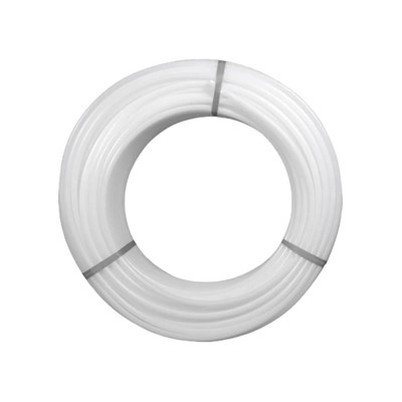
A PERT tube PERT Tube with high thermal conductivity can transfer heat from the hot water inside the tube to the floor surface more effectively. This results in a more uniform distribution of heat across the floor, reducing cold spots and providing a more comfortable living environment. Moreover, a higher thermal conductivity allows the system to reach the desired temperature more quickly, which can lead to energy savings in the long run.
For example, if we compare two PERT tubes with different thermal conductivities in an underfloor heating system, the tube with the higher thermal conductivity will require less time to heat up the floor to the set temperature. This means that the boiler or heat source can operate for a shorter period, consuming less energy and reducing operating costs.
Influence on Cooling Systems
PERT tubing is also used in some cooling systems, such as chilled water distribution networks. In these applications, the tubing is used to transport cold water to different parts of a building to cool the air. Similar to heating systems, the thermal conductivity of the PERT tubing affects the efficiency of the cooling process.
A PERT tube with good thermal conductivity can transfer the cold from the chilled water to the surrounding environment more rapidly. This helps in maintaining a lower temperature in the building and improves the overall cooling performance. Additionally, a higher thermal conductivity can reduce the temperature difference between the water inside the tube and the air outside, minimizing the risk of condensation on the surface of the tubing.
Effect on Heat Exchangers
Heat exchangers are devices that transfer heat between two or more fluids. PERT tubing is often used as a component in heat exchangers due to its excellent chemical resistance and flexibility. The thermal conductivity of the PERT tubing is a key factor in determining the heat transfer efficiency of the heat exchanger.
In a heat exchanger, the PERT tubing acts as a medium for transferring heat from one fluid to another. A higher thermal conductivity of the tubing allows for a greater rate of heat transfer, which means that the heat exchanger can operate more efficiently. This can lead to smaller and more compact heat exchangers, which are not only more cost - effective but also easier to install and maintain.
Considerations for Insulation
While high thermal conductivity is beneficial in applications where efficient heat transfer is required, there are also situations where insulation is necessary. For example, in some long - distance hot water distribution systems, it is important to minimize heat loss to the surroundings. In such cases, PERT tubing with lower thermal conductivity may be preferred, or additional insulation materials can be used.
When choosing insulation for PERT tubing, it is essential to consider the thermal conductivity of both the tubing and the insulation material. The insulation should have a low thermal conductivity to prevent heat from escaping, while the tubing should be able to withstand the mechanical and chemical stresses of the application.
Factors Affecting the Thermal Conductivity of PERT Tubing
As mentioned earlier, several factors can affect the thermal conductivity of PERT tubing. The type of polyethylene resin used is a significant factor. Different grades of polyethylene have different molecular structures, which can influence their thermal properties. For example, resins with a more linear molecular structure tend to have higher thermal conductivities compared to those with a more branched structure.
Additives can also play a role in modifying the thermal conductivity of PERT tubing. Some additives, such as thermal conductive fillers, can increase the thermal conductivity of the tubing by providing additional pathways for heat transfer. On the other hand, insulating additives can be used to reduce the thermal conductivity if insulation is required.
The manufacturing process can also impact the thermal conductivity of PERT tubing. Factors such as extrusion temperature, cooling rate, and orientation of the polymer chains during processing can all affect the final thermal properties of the tubing.
Quality Control and Testing
As a PERT Tubing supplier, ensuring the quality and consistency of the thermal conductivity of our products is of utmost importance. We implement strict quality control measures throughout the manufacturing process to ensure that our PERT tubing meets the required thermal conductivity standards.
We use advanced testing equipment to measure the thermal conductivity of our tubing samples. These tests are conducted in accordance with international standards to ensure accurate and reliable results. By regularly testing our products, we can identify any variations in thermal conductivity and take corrective actions to maintain the quality of our PERT tubing.
Conclusion
The thermal conductivity of PERT tubing has a profound impact on its performance in various applications, including heating systems, cooling systems, and heat exchangers. Understanding the role of thermal conductivity and its influencing factors is crucial for selecting the right PERT tubing for a specific application.
As a PERT Tubing supplier, we are committed to providing high - quality PERT tubing with consistent thermal conductivity. Our products are designed to meet the diverse needs of our customers, whether they require efficient heat transfer or effective insulation.
If you are interested in purchasing PERT tubing for your project, we invite you to contact us for a detailed discussion. Our team of experts is ready to assist you in selecting the most suitable PERT tubing based on your specific requirements. Let's work together to achieve optimal performance in your heating, cooling, or heat exchange systems.
References
- "Polymer Science and Technology" by R. J. Young and P. A. Lovell
- "Heat Transfer" by Frank P. Incropera and David P. DeWitt
- Industry standards and guidelines related to PERT tubing and thermal conductivity testing.