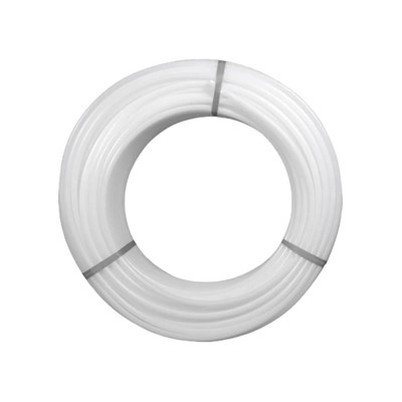
How does the fire - resistance of PERT tubing compare to other materials?
Leave a message

When it comes to selecting the right tubing for various applications, fire resistance is a critical factor that cannot be overlooked. As a PERT Tubing supplier, I've witnessed firsthand the growing demand for materials that not only meet the functional requirements but also ensure safety in case of fire. In this blog, I'll delve into how the fire - resistance of PERT tubing compares to other materials, providing you with valuable insights to make informed decisions.
Understanding PERT Tubing
PERT (Polyethylene Raised Temperature) tubing is a type of plastic tubing that has gained popularity in recent years, especially in heating and plumbing systems. It is known for its excellent flexibility, long - term durability, and resistance to corrosion. But how does it fare in terms of fire resistance?
PERT tubing has a relatively low flammability rating. It is designed to melt rather than burn under high - temperature conditions. When exposed to fire, PERT tubing will start to soften and eventually melt, which can help prevent the spread of flames by creating a physical barrier. However, it's important to note that PERT tubing is not completely fire - proof. It will burn if the fire source is strong enough and sustained for a long time.
Comparing with Metal Tubing
Let's start by comparing PERT tubing with metal tubing, such as copper and steel. Metal tubing is often considered to be highly fire - resistant. Copper and steel have high melting points, which means they can withstand high temperatures without deforming or burning easily.
In a fire situation, metal tubing can maintain its structural integrity for a longer period compared to PERT tubing. For example, copper has a melting point of around 1084°C, while steel's melting point can range from 1370°C to 1510°C. In contrast, PERT tubing typically starts to soften at around 80 - 90°C and melts at approximately 120 - 130°C.
However, metal tubing also has its drawbacks. It is more expensive than PERT tubing, both in terms of material cost and installation cost. Metal tubing is also heavier, which can make installation more difficult and costly. Additionally, metal tubing is prone to corrosion over time, especially in certain environments, which can reduce its lifespan.
Comparing with PVC Tubing
PVC (Polyvinyl Chloride) tubing is another common type of plastic tubing used in various applications. PVC has some fire - resistant properties due to the presence of chlorine in its chemical structure. When exposed to fire, PVC will release hydrogen chloride gas, which can act as a flame retardant to some extent.
PVC tubing has a higher fire - resistance rating than PERT tubing in terms of its ability to self - extinguish. Once the fire source is removed, PVC tubing is more likely to stop burning on its own. However, the hydrogen chloride gas released by PVC during combustion is toxic and can be harmful to human health and the environment.
PERT tubing, on the other hand, does not release toxic gases when it melts. This makes it a safer option in terms of air quality during a fire situation. Moreover, PERT tubing is more flexible than PVC tubing, which can simplify the installation process and reduce the need for additional fittings.
Comparing with Cross - Linked Polyethylene (PEX) Tubing
PEX tubing is also a popular choice for plumbing and heating systems. It is similar to PERT tubing in many ways, but there are differences in their fire - resistance properties.
PEX tubing has a cross - linked molecular structure, which gives it better mechanical properties and higher temperature resistance compared to PERT tubing. In terms of fire resistance, PEX tubing can withstand higher temperatures before melting. However, PEX tubing is more likely to burn and produce flames when exposed to fire compared to PERT tubing.
PERT tubing's ability to melt rather than burn can be an advantage in some situations. It can prevent the formation of large flames and limit the spread of fire. Additionally, PERT tubing is generally easier to install than PEX tubing, as it does not require special tools or techniques for joining.
Applications and Considerations
The choice between PERT tubing and other materials depends on the specific application. In residential plumbing systems, PERT tubing is often a preferred choice due to its cost - effectiveness, flexibility, and ease of installation. Although its fire - resistance may not be as high as some other materials, the risk of fire in a residential plumbing context is relatively low.
In commercial or industrial settings where fire safety is a top priority, additional fire - protection measures may be required when using PERT tubing. For example, PERT tubing can be installed within fire - rated enclosures or protected with fire - resistant coatings.
Conclusion
In conclusion, the fire - resistance of PERT tubing has its own characteristics when compared to other materials. While it may not be as fire - resistant as metal tubing or some types of PVC and PEX tubing in terms of withstanding high temperatures, it offers other advantages such as non - toxic melting, flexibility, and cost - effectiveness.


As a PERT Tubing supplier, I understand the importance of providing high - quality products that meet your specific needs. If you are considering using PERT tubing in your project, I encourage you to visit our PERT Tube page to learn more about our products.
If you have any questions or are interested in purchasing PERT tubing, please feel free to contact us. We are more than happy to discuss your requirements and provide you with the best solutions. Our team of experts can assist you in choosing the right type of tubing for your application, taking into account factors such as fire resistance, cost, and installation requirements.
References
- "Handbook of Plastic Materials and Technology" by Irvin I. Rubin.
- "Plastics in Building Construction" by Charles A. Harper.
- Industry reports on tubing materials and their fire - resistance properties.