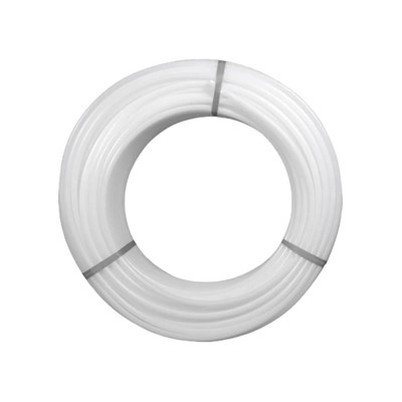
Can PERT tubing be used in medical applications?
Leave a message

PERT (Polyethylene Raised Temperature) tubing is a type of plastic tubing known for its excellent thermal resistance, flexibility, and chemical stability. As a PERT tubing supplier, I often receive inquiries about its potential use in medical applications. In this blog post, I will explore the feasibility of using PERT tubing in medical settings, considering its properties, regulatory requirements, and real - world applications.
Properties of PERT Tubing
PERT tubing is made from a special type of polyethylene that has been modified to enhance its performance at elevated temperatures. One of the key advantages of PERT tubing is its high - temperature resistance. It can withstand continuous use at temperatures up to 95°C and short - term use at temperatures up to 110°C. This makes it suitable for applications where heat sterilization is required, such as in medical equipment that needs to be disinfected regularly.
Another important property of PERT tubing is its flexibility. It can be easily bent and shaped without kinking, which is crucial in medical applications where tubing needs to be routed around complex equipment or within the human body. The flexibility also reduces the stress on the tubing during installation and use, extending its service life.
In terms of chemical stability, PERT tubing is resistant to a wide range of chemicals, including many common disinfectants used in medical facilities. This resistance helps to prevent the tubing from degrading over time, ensuring its long - term performance and safety. Additionally, PERT tubing has low permeability to gases and liquids, which can prevent the leakage of medical fluids and the ingress of contaminants.
Regulatory Requirements for Medical Tubing
Before any tubing can be used in medical applications, it must meet strict regulatory requirements. In the United States, the Food and Drug Administration (FDA) regulates medical devices, including tubing. The FDA classifies medical tubing based on its intended use, and different classes have different levels of regulatory scrutiny.
For example, Class I medical devices are considered to pose the lowest risk to patients and generally require only general controls, such as compliance with good manufacturing practices (GMP). Class II medical devices, which pose a moderate risk, require additional special controls, such as performance standards and post - market surveillance. Class III medical devices, which pose the highest risk, require pre - market approval from the FDA.
In addition to the FDA, other international regulatory bodies, such as the European Union's Medical Device Regulation (MDR), also have their own requirements for medical tubing. These regulations often cover aspects such as biocompatibility, sterility, and labeling. Biocompatibility is particularly important in medical applications, as the tubing must not cause an adverse reaction when in contact with the human body.
PERT Tubing in Medical Applications
Despite its favorable properties, the use of PERT tubing in medical applications is not as widespread as in other industries. However, there are some areas where PERT tubing has shown potential.
One potential application is in medical fluid transfer. PERT tubing's chemical resistance and low permeability make it suitable for transporting a variety of medical fluids, such as saline solutions, medications, and blood products. Its flexibility allows for easy installation in medical equipment, such as infusion pumps and dialysis machines.
Another area where PERT tubing could be used is in heating and cooling systems within medical facilities. For example, it could be used in the water - based heating and cooling loops of operating rooms and patient rooms. The high - temperature resistance of PERT tubing ensures that it can handle the temperature requirements of these systems, while its flexibility simplifies the installation process.


In addition, PERT tubing could potentially be used in minimally invasive medical procedures. Its small diameter and flexibility make it suitable for use in catheters and other endoscopic devices. However, for such applications, the tubing would need to meet strict biocompatibility and sterility requirements.
Challenges and Limitations
While PERT tubing has many advantages, there are also some challenges and limitations to its use in medical applications. One of the main challenges is meeting the strict regulatory requirements. The process of obtaining regulatory approval can be time - consuming and expensive, which may deter some manufacturers from using PERT tubing in medical products.
Another limitation is the lack of long - term data on the biocompatibility of PERT tubing. Although the material is generally considered to be chemically stable, more research is needed to fully understand its potential effects on the human body over extended periods of time. Additionally, the surface properties of PERT tubing may need to be modified to prevent the adhesion of bacteria and other microorganisms, which is crucial in medical applications to prevent infections.
Conclusion
In conclusion, PERT tubing has several properties that make it a promising candidate for medical applications. Its high - temperature resistance, flexibility, and chemical stability offer many advantages in medical fluid transfer, heating and cooling systems, and potentially in minimally invasive procedures. However, the use of PERT tubing in medical settings is currently limited by regulatory requirements and the need for more research on its biocompatibility.
As a PERT tubing supplier, I am committed to working with medical device manufacturers to overcome these challenges. We can provide high - quality PERT tubing that meets the strictest quality standards and work together to conduct the necessary research and testing to obtain regulatory approval. If you are interested in exploring the use of PERT Tube in your medical applications, I encourage you to contact me. We can discuss your specific requirements and determine whether PERT tubing is the right solution for your needs. Let's start a conversation and see how we can collaborate to bring innovative medical solutions to the market.
References
- "Medical Device Regulation (MDR) - European Union." European Commission.
- "Food and Drug Administration (FDA) - Medical Device Classification." U.S. Food and Drug Administration.
- "Properties and Applications of Polyethylene Raised Temperature (PERT) Tubing." Journal of Plastic Materials.