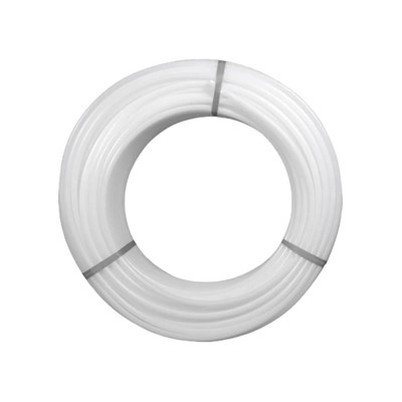
What are the safety standards for PERT Tube?
Leave a message

As a PERT Tube supplier, I understand the critical importance of safety standards when it comes to this versatile and widely used piping solution. PERT, or Polyethylene Raised Temperature, tubes are popular for various applications, including radiant floor heating, domestic water supply, and air conditioning systems. In this blog post, I will delve into the safety standards that PERT tubes must adhere to, ensuring their reliability and performance in different settings.
Material Composition and Quality
The first aspect of safety standards for PERT tubes lies in their material composition. High - quality PERT tubes are made from specially formulated polyethylene materials that can withstand elevated temperatures and pressures. These materials are typically cross - linked to enhance their mechanical properties, such as strength, flexibility, and resistance to cracking.
The raw materials used in PERT tube production should meet strict quality control measures. For example, they should be free from harmful substances like heavy metals (such as lead, mercury, and cadmium) and other contaminants that could leach into the water supply if used for domestic water applications. This is crucial for ensuring the health and safety of end - users. Manufacturers must source their raw materials from reliable suppliers and conduct regular testing to verify the quality of the materials.
Temperature and Pressure Resistance
PERT tubes are often used in systems where they are exposed to varying temperatures and pressures. Therefore, safety standards require that these tubes have adequate temperature and pressure resistance.
In terms of temperature, PERT tubes are designed to operate within a specific temperature range. For most applications, they can handle temperatures from around 0°C to 95°C. However, in high - end applications, some PERT tubes can withstand even higher temperatures for short periods. The tubes should not deform, melt, or lose their structural integrity within the specified temperature range. This is important for maintaining the functionality of the system and preventing leaks or failures.
Regarding pressure resistance, PERT tubes must be able to withstand the internal pressure generated by the fluid flowing through them. The pressure rating of a PERT tube is usually specified in bars. For example, a common pressure rating for PERT tubes used in domestic water supply systems is around 10 - 16 bars. The tubes should be tested under different pressure conditions during the manufacturing process to ensure that they meet the required standards. This testing helps to identify any weak points in the tubes and ensures that they can safely operate in real - world applications.
Chemical Resistance
PERT tubes may come into contact with various chemicals in different applications. For instance, in heating systems, they may be exposed to anti - freeze agents or other additives. Safety standards require that PERT tubes have good chemical resistance to prevent degradation and damage.
The tubes should not react with the chemicals they come into contact with, which could lead to a reduction in their mechanical properties or the release of harmful substances. Manufacturers conduct chemical resistance tests on PERT tubes using a variety of chemicals to ensure their compatibility. This helps to guarantee the long - term performance and safety of the tubes in different chemical environments.
Installation and Connection Safety
Proper installation and connection of PERT tubes are also essential for safety. Safety standards provide guidelines on how to install PERT tubes correctly to prevent leaks and ensure the overall integrity of the system.
During installation, the tubes should be handled carefully to avoid damage. They should be installed at the correct depth and in a suitable environment. For example, in radiant floor heating systems, the tubes should be installed in a well - insulated layer to prevent heat loss and ensure efficient operation.
The connections between PERT tubes and other components, such as fittings and valves, are also critical. The connections should be made using appropriate methods and materials. For example, heat - fusion welding is a common method for joining PERT tubes, as it creates a strong and leak - proof connection. The fittings used should be compatible with the PERT tubes and should meet the same safety standards. This ensures that the connections are reliable and can withstand the same temperature and pressure conditions as the tubes themselves.
Hygiene and Water Quality
When PERT tubes are used for domestic water supply, hygiene and water quality are of utmost importance. Safety standards require that PERT tubes do not contaminate the water supply.
The inner surface of the tubes should be smooth and non - porous to prevent the growth of bacteria and other microorganisms. The materials used in the tubes should be food - grade and comply with relevant hygiene regulations. Additionally, the tubes should not release any harmful substances into the water, such as plasticizers or volatile organic compounds (VOCs). Regular testing of the water quality in systems using PERT tubes is necessary to ensure that it meets the required standards for human consumption.
Fire Safety
Fire safety is another important aspect of the safety standards for PERT tubes. Although PERT tubes are made of polyethylene, which is a flammable material, they can be treated to improve their fire - retardant properties.
Safety standards specify the fire - retardant requirements for PERT tubes. For example, the tubes should have a low flammability rating and should not contribute significantly to the spread of fire. They may be required to self - extinguish within a certain time after the ignition source is removed. This is crucial for preventing the rapid spread of fire in buildings and ensuring the safety of occupants.
Environmental Considerations
In today's environmentally conscious world, safety standards for PERT tubes also take into account environmental considerations. PERT tubes should be recyclable at the end of their service life. This helps to reduce waste and minimize the environmental impact.
The manufacturing process of PERT tubes should also be environmentally friendly. Manufacturers are encouraged to use energy - efficient production methods and reduce the use of harmful chemicals. By adhering to these environmental safety standards, PERT tubes can be a more sustainable choice for various applications.
Compliance with International Standards
To ensure the safety and quality of PERT tubes, they should comply with international standards. Some of the well - known international standards for PERT tubes include ISO (International Organization for Standardization) standards and ASTM (American Society for Testing and Materials) standards.
These standards provide a unified framework for the design, production, testing, and performance of PERT tubes. By complying with these international standards, PERT tubes can be sold and used in different countries with confidence. They also ensure that the tubes meet the highest levels of safety and quality.


As a [Your company role] at a PERT Tube supplier, I am committed to providing PERT tubes that meet all the necessary safety standards. Our PERT tubes are carefully manufactured using high - quality materials and state - of - the - art production techniques. We conduct rigorous testing at every stage of the production process to ensure that our tubes meet or exceed the required safety standards.
If you are in the market for reliable and safe PERT tubes, we invite you to explore our product range at PERT Tube. Our team of experts is ready to assist you with any questions you may have and to guide you through the procurement process. Whether you are working on a small domestic project or a large - scale commercial installation, we have the right PERT tube solution for you. Contact us today to start a procurement discussion and discover how our PERT tubes can meet your specific needs.
References
- International Organization for Standardization (ISO). Relevant ISO standards for plastic pipes and fittings.
- American Society for Testing and Materials (ASTM). ASTM standards related to PERT tubes.
- Various technical reports and research papers on the properties and safety of PERT tubes.