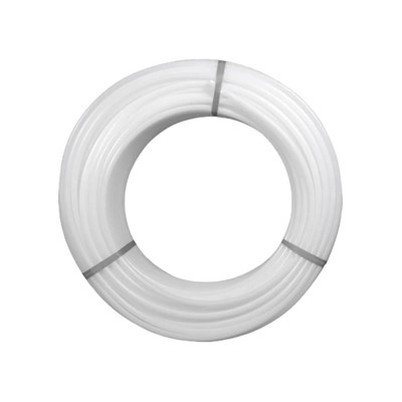
Is PERT Pipe suitable for vacuum applications?
Leave a message

Is PERT Pipe Suitable for Vacuum Applications?
As a PERT pipe supplier, I often encounter inquiries from customers regarding the suitability of PERT pipes for various applications, including vacuum systems. Polyethylene of Raised Temperature Resistance (PERT) pipes have gained significant popularity in recent years due to their excellent thermal stability, flexibility, and chemical resistance. However, the question remains: Are PERT pipes suitable for vacuum applications? In this blog post, I will delve into the properties of PERT pipes and evaluate their performance under vacuum conditions.
Understanding PERT Pipes
PERT pipes are made from a special type of polyethylene resin that has been modified to enhance its heat resistance. This allows PERT pipes to withstand higher temperatures compared to traditional polyethylene pipes, making them suitable for hot water distribution systems, underfloor heating, and other applications where elevated temperatures are involved. PERT pipes are also known for their flexibility, which makes them easy to install and reduces the need for additional fittings.
One of the key advantages of PERT pipes is their excellent chemical resistance. They are resistant to a wide range of chemicals, including acids, alkalis, and salts, which makes them suitable for use in various industrial and domestic applications. Additionally, PERT pipes have a smooth inner surface, which reduces friction and improves the flow of fluids through the pipes.
Vacuum Applications and the Challenges
Vacuum applications involve creating a pressure below atmospheric pressure within a system. This can be achieved through various methods, such as using vacuum pumps or creating a sealed chamber. In vacuum systems, the pipes are subjected to external pressure, which can cause them to collapse if they are not designed to withstand such conditions.
The main challenge in using pipes for vacuum applications is ensuring their structural integrity under negative pressure. The pipes must be able to resist the external pressure without deforming or collapsing. Additionally, the pipes must be able to maintain a tight seal to prevent air leakage into the system, which can affect the performance of the vacuum.
Evaluating PERT Pipes for Vacuum Applications
To determine whether PERT pipes are suitable for vacuum applications, we need to consider several factors, including their mechanical properties, pressure ratings, and sealing capabilities.
Mechanical Properties
PERT pipes have good mechanical properties, including high tensile strength and flexibility. However, their ability to withstand external pressure is limited compared to some other types of pipes, such as stainless steel or PVC pipes. Under vacuum conditions, the external pressure can cause the PERT pipes to deform or collapse if the pressure exceeds their design limits.
The mechanical properties of PERT pipes can be affected by factors such as temperature, pipe diameter, and wall thickness. Higher temperatures can reduce the strength and stiffness of PERT pipes, making them more susceptible to deformation under vacuum. Similarly, larger diameter pipes and thinner wall thicknesses are more likely to collapse under external pressure compared to smaller diameter pipes with thicker walls.
Pressure Ratings
Most PERT pipes are designed for use in positive pressure applications, such as water supply and heating systems. The pressure ratings of PERT pipes typically indicate the maximum internal pressure that the pipes can withstand without failure. However, these ratings do not necessarily reflect the pipes' ability to withstand external pressure in vacuum applications.
When considering PERT pipes for vacuum applications, it is important to consult the manufacturer's specifications to determine their pressure ratings under negative pressure. Some manufacturers may provide specific guidelines or pressure ratings for vacuum applications, while others may recommend against using their PERT pipes in such conditions.
Sealing Capabilities
In vacuum applications, maintaining a tight seal is crucial to prevent air leakage into the system. PERT pipes are typically joined using heat fusion or mechanical fittings, which can provide a reliable seal in positive pressure applications. However, under vacuum conditions, the seal may be more prone to leakage due to the external pressure acting on the pipes.
To ensure a tight seal in vacuum applications, it is important to use high-quality fittings and installation techniques. The fittings should be designed to withstand the external pressure and provide a reliable seal. Additionally, proper installation procedures, such as cleaning and preparing the pipe surfaces before joining, can help to improve the sealing performance.
Case Studies and Real-World Applications
While PERT pipes are not commonly used in high-vacuum applications, there are some cases where they have been successfully used in low-vacuum systems. For example, in some laboratory settings, PERT pipes have been used to transport non-corrosive fluids under low-vacuum conditions.
In these applications, the vacuum levels are relatively low, and the PERT pipes are able to withstand the external pressure without significant deformation or collapse. However, it is important to note that these applications typically involve short pipe runs and relatively low vacuum levels. In more demanding vacuum applications, such as industrial vacuum systems or high-vacuum chambers, other types of pipes may be more suitable.
Conclusion
In conclusion, the suitability of PERT pipes for vacuum applications depends on several factors, including the mechanical properties, pressure ratings, and sealing capabilities of the pipes, as well as the specific requirements of the vacuum system. While PERT pipes have some advantages, such as flexibility and chemical resistance, their ability to withstand external pressure in vacuum applications is limited compared to some other types of pipes.
In low-vacuum applications where the vacuum levels are relatively low and the pipe runs are short, PERT pipes may be a viable option. However, in high-vacuum applications or where the external pressure is significant, it is recommended to use pipes that are specifically designed for vacuum applications, such as stainless steel or PVC pipes.
If you are considering using PERT pipes in a vacuum application, I recommend consulting with a qualified engineer or the manufacturer of the PERT pipes to determine their suitability for your specific needs. They can provide you with more detailed information and guidance based on your application requirements.
If you have any further questions or would like to discuss your PERT pipe requirements, please feel free to contact us. We are a leading PERT Tube supplier and can provide you with high-quality PERT pipes and expert advice.


References
- ASTM International. (20XX). Standard Specification for Polyethylene of Raised Temperature Resistance (PERT) Plastic Hot - and Cold - Water Distribution Systems.
- Pipe Manufacturers' Association. (20XX). Guidelines for Pipe Selection in Various Applications.
- Technical Reports from PERT Pipe Manufacturers.