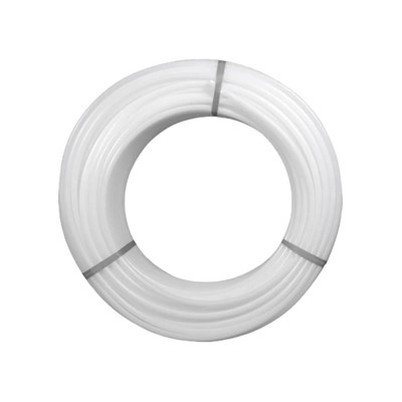
What is the thermal conductivity of PERT tubing?
Leave a message

As a supplier of PERT tubing, I often encounter questions from customers regarding the thermal conductivity of this remarkable product. Understanding the thermal conductivity of PERT tubing is crucial for various applications, especially in heating and cooling systems. In this blog, I'll delve into the concept of thermal conductivity, explore the specific thermal conductivity of PERT tubing, and discuss its implications for practical use.
Understanding Thermal Conductivity
Thermal conductivity is a fundamental property of materials that describes their ability to conduct heat. It is defined as the quantity of heat that passes through a unit area of a material in a unit time under a unit temperature gradient. In simpler terms, it measures how easily heat can flow through a material. The SI unit for thermal conductivity is watts per meter-kelvin (W/(m·K)).
Materials with high thermal conductivity, such as metals like copper and aluminum, allow heat to transfer quickly. On the other hand, materials with low thermal conductivity, like insulators such as fiberglass and foam, impede the flow of heat. The thermal conductivity of a material depends on several factors, including its chemical composition, molecular structure, and physical state.
Thermal Conductivity of PERT Tubing
PERT, or Polyethylene of Raised Temperature resistance, is a type of polyethylene plastic that has been specially formulated to withstand higher temperatures than standard polyethylene. PERT tubing is widely used in heating and cooling systems, such as underfloor heating, radiator connections, and solar thermal systems, due to its excellent flexibility, durability, and resistance to chemicals and corrosion.
The thermal conductivity of PERT tubing typically ranges from 0.35 to 0.4 W/(m·K). This value is relatively low compared to metals but higher than many traditional insulation materials. The moderate thermal conductivity of PERT tubing makes it an ideal choice for applications where heat transfer needs to be controlled.
In underfloor heating systems, for example, the moderate thermal conductivity of PERT tubing allows for efficient heat transfer from the hot water flowing inside the tubes to the floor surface, which then radiates heat into the room. At the same time, the relatively low thermal conductivity helps to minimize heat loss through the walls of the tubing, ensuring that most of the heat is transferred to the desired location.
Factors Affecting the Thermal Conductivity of PERT Tubing
Several factors can influence the thermal conductivity of PERT tubing. These include:
- Material Composition: The exact formulation of the PERT resin can affect its thermal conductivity. Different additives and fillers used in the manufacturing process can alter the molecular structure of the material, thereby changing its heat transfer properties.
- Temperature: The thermal conductivity of PERT tubing generally increases with temperature. As the temperature rises, the molecular motion within the material becomes more energetic, allowing heat to transfer more easily.
- Density: The density of the PERT tubing can also impact its thermal conductivity. Higher density materials tend to have higher thermal conductivity because the molecules are closer together, facilitating heat transfer.
- Wall Thickness: The thickness of the tubing wall can affect the overall heat transfer rate. Thicker walls can provide more insulation and reduce heat loss, but they may also slow down the rate of heat transfer to the surrounding environment.
Advantages of PERT Tubing's Thermal Conductivity
The moderate thermal conductivity of PERT tubing offers several advantages in heating and cooling applications:
- Energy Efficiency: By allowing for efficient heat transfer while minimizing heat loss, PERT tubing helps to reduce energy consumption in heating and cooling systems. This can lead to significant cost savings over time.
- Comfort: In underfloor heating systems, the even distribution of heat provided by PERT tubing creates a more comfortable indoor environment. The moderate thermal conductivity ensures that the floor surface reaches and maintains a consistent temperature.
- Versatility: The ability to control heat transfer makes PERT tubing suitable for a wide range of applications, from residential to commercial buildings. It can be used in various heating and cooling systems, including radiant floor heating, baseboard heating, and solar thermal collectors.
- Longevity: PERT tubing is highly resistant to aging, chemicals, and corrosion, which means it can maintain its thermal conductivity and other properties over a long period of time. This reduces the need for frequent replacements and maintenance.
Applications of PERT Tubing Based on Its Thermal Conductivity
The thermal conductivity of PERT tubing makes it well-suited for the following applications:
- Underfloor Heating Systems: As mentioned earlier, PERT tubing is commonly used in underfloor heating systems. Its moderate thermal conductivity allows for efficient heat transfer from the hot water to the floor, providing a comfortable and energy-efficient heating solution.
- Radiator Connections: PERT tubing can be used to connect radiators to the heating system. Its flexibility and ease of installation make it a popular choice for this application, while its thermal conductivity ensures efficient heat transfer.
- Solar Thermal Systems: In solar thermal systems, PERT tubing is used to transport the heated fluid from the solar collectors to the storage tank or the heating system. The moderate thermal conductivity helps to minimize heat loss during the transfer process.
- Cooling Systems: PERT tubing can also be used in cooling systems, such as chilled water systems. Its ability to control heat transfer makes it suitable for applications where precise temperature control is required.
Conclusion
In conclusion, the thermal conductivity of PERT tubing plays a crucial role in its performance and suitability for various heating and cooling applications. With a typical thermal conductivity ranging from 0.35 to 0.4 W/(m·K), PERT tubing offers a balance between efficient heat transfer and insulation, making it an energy-efficient and versatile choice.


As a PERT Tube supplier, I am committed to providing high-quality PERT tubing that meets the specific needs of our customers. Whether you are looking for a reliable solution for your underfloor heating system or a versatile material for your solar thermal project, our PERT tubing is designed to deliver exceptional performance.
If you are interested in learning more about our PERT tubing or would like to discuss your specific requirements, please feel free to contact us. We look forward to the opportunity to work with you and help you find the perfect solution for your heating and cooling needs.
References
- ASHRAE Handbook - Fundamentals. American Society of Heating, Refrigerating and Air-Conditioning Engineers.
- ISO 10508:2015 - Plastics piping systems for hot and cold water installations - Polyethylene of raised temperature resistance (PE-RT) - Specifications. International Organization for Standardization.
- Technical literature provided by PERT resin manufacturers.