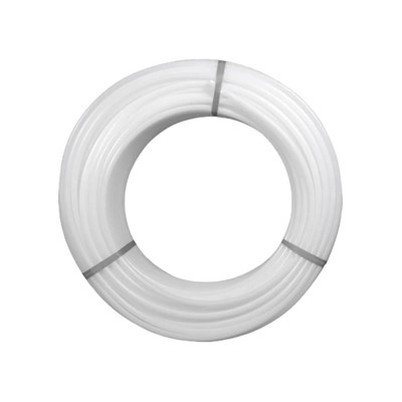
What is the pressure drop in PERT Pipe?
Leave a message

Hey there! As a PERT pipe supplier, I often get asked about the pressure drop in PERT pipes. So, I figured it'd be cool to write a blog post about it and share some insights.
First off, let's talk about what pressure drop actually is. Pressure drop is basically the decrease in pressure that happens as a fluid (like water) flows through a pipe. It's like when you're trying to blow air through a straw. If the straw is long or narrow, it's harder to blow the air through, and you feel more resistance. That resistance is what causes the pressure to drop.
In the case of PERT pipes, pressure drop can be affected by a bunch of factors. One of the main ones is the pipe's diameter. Smaller diameter pipes have more friction inside, which means the fluid has to work harder to flow through. So, there's a bigger pressure drop. For example, if you've got a 1/2 - inch PERT pipe and a 1 - inch PERT pipe, the 1/2 - inch pipe will have a higher pressure drop for the same flow rate of water.
Another factor is the length of the pipe. The longer the pipe, the more distance the fluid has to travel, and the more friction it encounters. So, a longer PERT pipe will also have a greater pressure drop. Imagine you're trying to push a ball through a long tube; the longer the tube, the more energy you need to use.
The flow rate of the fluid is also super important. If you're pushing a lot of water through the pipe quickly, there'll be more pressure drop. It's like trying to run through a crowded hallway at a high speed; you'll face more resistance. On the other hand, if the flow rate is low, the pressure drop will be less.
Now, why does pressure drop matter when it comes to PERT pipes? Well, if the pressure drop is too high, it can cause problems in your plumbing system. For instance, you might not get enough water pressure at the end of the pipe. That means your faucets might not have a strong flow, and your showers could be weak. In a heating system using PERT pipes, a high pressure drop could mean that the hot water isn't being circulated effectively, and your rooms might not get warm enough.
So, how can we calculate the pressure drop in PERT pipes? There are some formulas and charts out there. One common way is to use the Darcy - Weisbach equation. This equation takes into account things like the pipe's diameter, length, the roughness of the pipe's inner surface, and the fluid's velocity. But it can be a bit complicated for the average person.
A simpler way is to refer to the manufacturer's data. As a PERT pipe supplier, we usually provide information about the pressure drop for different pipe sizes and flow rates. You can find this data in our product catalogs or on our website. It's based on tests and calculations, so it gives you a pretty good idea of what to expect.


Let's take a real - life example. Say you're building a small residential plumbing system. You're using link text PERT tubes for the water supply. You've got a 3/4 - inch pipe that's about 50 feet long. If you're planning to have a flow rate of around 5 gallons per minute, you can check our data to see what the pressure drop will be. Based on our tests, for this setup, the pressure drop might be around 2 - 3 psi (pounds per square inch).
Now, if you increase the flow rate to 10 gallons per minute, the pressure drop will go up. It could be around 6 - 8 psi. This shows how important it is to consider the flow rate when designing your plumbing system.
As a PERT pipe supplier, we always try to make our pipes as efficient as possible to minimize pressure drop. We use high - quality materials and advanced manufacturing techniques to ensure that the inner surface of the pipes is smooth. A smooth surface means less friction and less pressure drop.
If you're in the process of planning a plumbing or heating project and you're not sure about the pressure drop in PERT pipes, don't worry. We're here to help. You can reach out to us, and our team of experts will be happy to assist you. We can help you choose the right pipe size, calculate the pressure drop for your specific setup, and give you advice on how to optimize your system.
Whether you're a DIY enthusiast working on a small home project or a professional plumber working on a large commercial building, we've got the PERT pipes you need. Our pipes are durable, flexible, and designed to perform well under different conditions.
So, if you're interested in learning more about our PERT pipes or want to discuss your project and the pressure drop calculations, don't hesitate to get in touch. We're looking forward to working with you and helping you create a successful plumbing or heating system.
References:
- Fluid Mechanics textbooks for the theory of pressure drop
- Manufacturer's data and test results for PERT pipes