

What is the expansion rate of a 6 inch pex pipe with temperature changes?
Leave a message

As a supplier of 6-inch PEX pipes, I often get asked about how these pipes respond to temperature changes. Understanding the expansion rate of a 6-inch PEX pipe with temperature variations is crucial for proper installation and long - term performance. In this blog, I'll delve into the science behind PEX pipe expansion, factors that influence it, and why it matters for your projects.
What is PEX Pipe?
PEX, or cross - linked polyethylene, is a type of plastic pipe that has gained significant popularity in plumbing and heating systems. It offers several advantages over traditional materials such as copper and PVC, including flexibility, resistance to corrosion, and ease of installation. The 6 - inch PEX pipe, in particular, is commonly used in larger - scale applications like commercial plumbing, industrial water distribution, and some high - capacity residential systems.
The Science of Thermal Expansion
All materials expand and contract with temperature changes, and PEX is no exception. When the temperature of a PEX pipe increases, the molecules in the polyethylene material gain energy and start to move more vigorously. This increased molecular motion causes the pipe to expand in length and diameter. Conversely, when the temperature drops, the molecules lose energy, slow down, and the pipe contracts.
The expansion rate of a material is typically described by its coefficient of linear thermal expansion (CLTE). The CLTE is defined as the change in length per unit length per degree of temperature change. For PEX pipes, the CLTE can vary depending on the type of cross - linking used (PEX - a, PEX - b, or PEX - c) and the specific formulation of the material.
Expansion Rate of 6 - Inch PEX Pipe
The expansion rate of a 6 - inch PEX pipe is directly related to its CLTE. On average, PEX pipes have a CLTE in the range of approximately 0.00022 to 0.00034 in/(in·°F) (0.0000396 to 0.0000612 m/(m·°C)). This means that for every 1°F increase in temperature, a 6 - inch PEX pipe will expand by about 0.00022 to 0.00034 inches per inch of its length.
Let's take a practical example. Suppose you have a 100 - foot (1200 inches) long 6 - inch PEX pipe, and the temperature increases by 50°F. Using the lower end of the CLTE range (0.00022 in/(in·°F)), the pipe will expand by:
[
\begin{align*}
\Delta L&=CLTE\times L\times\Delta T\
&=0.00022\times1200\times50\
& = 13.2\text{ inches}
\end{align*}
]
If we use the upper end of the CLTE range (0.00034 in/(in·°F)), the expansion would be:
[
\begin{align*}
\Delta L&=CLTE\times L\times\Delta T\
&=0.00034\times1200\times50\
&= 20.4\text{ inches}
\end{align*}
]
As you can see, even a moderate temperature change can result in a significant amount of expansion.
Factors Influencing Expansion Rate
- Cross - Linking Type: Different cross - linking methods result in PEX pipes with slightly different molecular structures. PEX - a, which is produced using the peroxide method, generally has a more uniform cross - linking structure and may have a relatively consistent expansion rate. PEX - b, produced by the silane method, and PEX - c, produced by the electron beam method, may have slightly different expansion characteristics. You can learn more about PE - Xa Pipe ISO15875 on our website.
- Pipe Wall Thickness: Thicker - walled PEX pipes may expand less than thinner - walled pipes for the same temperature change. This is because the additional material provides more resistance to the expansion forces.
- Surrounding Environment: If the PEX pipe is installed in a confined space or is surrounded by other materials, the expansion may be restricted. This can lead to increased stress on the pipe and potential damage if not properly accounted for during installation.
Why Expansion Rate Matters
- Proper Installation: Understanding the expansion rate is essential for proper installation of 6 - inch PEX pipes. Installers need to allow for sufficient expansion space, use appropriate hangers and supports, and install expansion loops if necessary. Failure to account for expansion can lead to pipe buckling, joint failure, and leaks over time.
- System Performance: Excessive expansion or contraction can affect the performance of the plumbing or heating system. For example, in a hot water distribution system, if the pipes expand too much and are not properly accommodated, it can cause water pressure fluctuations and reduce the efficiency of the system.
Our PEX Pipe Offerings
At our company, we offer a wide range of high - quality 6 - inch PEX pipes. Our PEX Anti UV Pipe is designed to withstand exposure to sunlight, making it suitable for outdoor applications. The PE - Xa Pipe for Plumbing Pipe is ideal for both residential and commercial plumbing systems, providing excellent resistance to chemicals and high - temperature water.
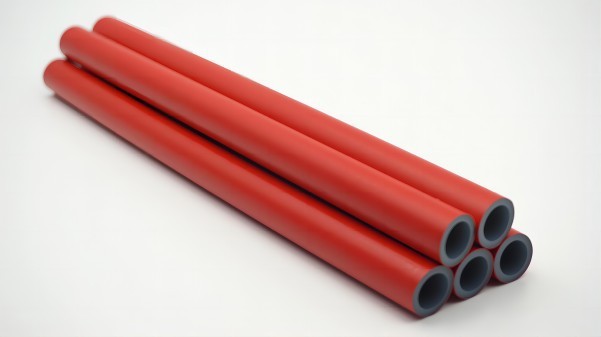

Contact Us for Your PEX Pipe Needs
If you're planning a project that requires 6 - inch PEX pipes, it's important to work with a reliable supplier. We have the expertise and experience to help you select the right PEX pipes for your specific application. Whether you need pipes for a small residential renovation or a large - scale commercial construction project, we can provide you with the products and support you need.
Don't hesitate to reach out to us to discuss your requirements and get a quote. Our team of experts is ready to assist you in making the best choices for your project.
References
- ASPE (American Society of Plumbing Engineers). "Plumbing Engineering Design Handbook."
- ASTM International. "Standards for PEX Pipes and Fittings."


