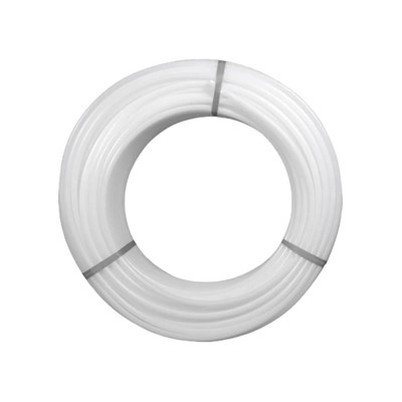
What is the effect of vibration on PERT Pipe?
Leave a message

Vibration is a common physical phenomenon that can have various impacts on different materials and products. As a PERT (Polyethylene Raised Temperature) Pipe supplier, understanding the effect of vibration on PERT pipes is crucial for ensuring the quality and performance of our products. In this blog, we will delve into the influence of vibration on PERT pipes from multiple aspects.
1. Structure and Characteristics of PERT Pipes
Before discussing the effect of vibration, it's necessary to understand the basic structure and characteristics of PERT pipes. PERT pipes are made from a special type of polyethylene material that has excellent heat - resistance, flexibility, and chemical stability. The molecular structure of PERT is designed to withstand relatively high temperatures, making it suitable for hot - water systems and under - floor heating applications.
The flexibility of PERT pipes allows for easy installation, reducing the need for excessive fittings and joints. This not only simplifies the installation process but also minimizes potential leakage points. The smooth inner surface of PERT pipes reduces fluid resistance, ensuring efficient fluid flow.
2. Impact of Vibration on the Physical Structure of PERT Pipes
2.1 Micro - structural Changes
Vibration can cause micro - structural changes in PERT pipes. When subjected to continuous vibration, the polymer chains within the PERT material may experience stress. Over time, this stress can lead to the breakage of some weak intermolecular bonds. As a result, the density and crystallinity of the material may change slightly.
For example, in a long - term vibrating environment, the originally well - ordered polymer chains may become more disordered. This can affect the mechanical properties of the pipe, such as its tensile strength and impact resistance. If the vibration frequency is close to the natural frequency of the pipe, resonance may occur, which can significantly amplify the stress on the polymer chains and accelerate the micro - structural damage.
2.2 Fatigue Cracking
Another important effect of vibration on PERT pipes is fatigue cracking. Vibration causes cyclic loading on the pipe wall. Each cycle of loading and unloading can cause microscopic damage to the material. As the number of cycles increases, these microscopic damages accumulate and eventually lead to the formation of cracks.
The location of fatigue cracking is often related to the stress concentration points in the pipe, such as at the joints or areas with sudden changes in pipe diameter. Once cracks form, they can propagate rapidly under the continuous action of vibration, which may ultimately lead to pipe failure and leakage.
3. Influence of Vibration on the Performance of PERT Pipes
3.1 Fluid Transportation Performance
Vibration can affect the fluid transportation performance of PERT pipes. When the pipe vibrates, the fluid inside the pipe will also be affected. The vibration may cause turbulence in the fluid flow, increasing the energy loss during fluid transportation. This means that more energy is required to maintain the same flow rate, resulting in higher operating costs.
In addition, if the vibration is severe enough, it may cause the pipe to move or deform slightly, which can change the cross - sectional area of the pipe. A change in the cross - sectional area will directly affect the flow rate and pressure of the fluid, potentially leading to unstable fluid supply in the system.
3.2 Sealing Performance
The sealing performance of PERT pipes is also influenced by vibration. In a piping system, joints and connections are crucial for preventing fluid leakage. Vibration can cause the joints to loosen over time. For example, the compression between the pipe and the fitting may decrease due to vibration, reducing the sealing force.
Moreover, if the pipe vibrates and moves relative to the fitting, the sealing material at the joint may be damaged. This can lead to the formation of small gaps through which the fluid can leak. In a hot - water system, even a small leak can cause energy loss and potential damage to the surrounding environment.

4. Factors Affecting the Effect of Vibration on PERT Pipes
4.1 Vibration Frequency and Amplitude
The frequency and amplitude of vibration are two key factors that determine the impact on PERT pipes. Low - frequency vibration with large amplitude may cause more significant macroscopic deformation of the pipe, such as bending or twisting. High - frequency vibration, on the other hand, is more likely to cause micro - structural damage and fatigue cracking.

When the vibration frequency is close to the natural frequency of the pipe, resonance occurs. Resonance can greatly amplify the vibration amplitude, leading to severe damage to the pipe in a relatively short period. Therefore, in the design and installation of PERT piping systems, it is necessary to avoid the vibration frequency being close to the natural frequency of the pipe.

4.2 Pipe Installation and Support
The way the PERT pipe is installed and supported also affects its response to vibration. A well - installed and properly supported pipe is more resistant to vibration. If the pipe is not firmly fixed, it will have more freedom to vibrate, increasing the risk of damage.
For example, using appropriate pipe clamps and supports at regular intervals can reduce the vibration amplitude of the pipe. The type of support also matters. Flexible supports can absorb some of the vibration energy, while rigid supports can restrict the movement of the pipe to a certain extent.
5. Mitigation Measures
As a PERT Pipe supplier, we recommend several mitigation measures to reduce the negative effects of vibration on PERT pipes:

5.1 Optimized Installation
Ensure that the pipes are installed according to the correct procedures. Use proper pipe clamps and supports at appropriate intervals to minimize the vibration amplitude. Make sure the joints are tightened properly to prevent loosening due to vibration.
5.2 Vibration - Absorbing Materials
In some cases, using vibration - absorbing materials can be an effective way to reduce the impact of vibration. For example, placing rubber pads between the pipe and the support can absorb some of the vibration energy and reduce the stress on the pipe.
5.3 System Design
In the design of the piping system, avoid creating conditions that may cause excessive vibration. For example, select appropriate pump types and operating parameters to reduce the vibration generated by the fluid flow.
6. Conclusion
In conclusion, vibration can have significant effects on PERT pipes, including micro - structural changes, fatigue cracking, and impacts on fluid transportation and sealing performance. As a [Your Position in the Company] at a PERT Pipe supplier, we are committed to providing high - quality PERT pipes and comprehensive solutions to our customers. We understand the importance of considering the impact of vibration in the design, installation, and operation of PERT piping systems.
If you are interested in our PERT Tube products or have any questions about the impact of vibration on PERT pipes, please feel free to contact us for further discussion and procurement negotiation. We are here to offer you the best products and services to meet your needs.
References
- "Plastic Pipes Handbook" by Dr. Reinhardt K. Ehrig
- "Polymer Materials Science and Engineering" by J.M. Galeski and A. Argon
- Research papers on the mechanical properties of PERT pipes under vibration conditions from relevant academic journals.