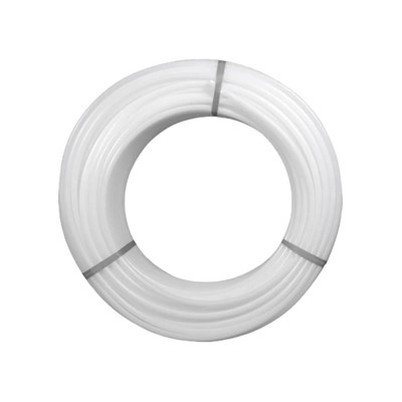
How to test the quality of PERT tubing?
Leave a message

Hey there! As a PERT tubing supplier, I know how crucial it is to ensure the quality of our products. So, I'm gonna share some tips on how to test the quality of PERT tubing.
Visual Inspection
First off, a simple visual inspection can tell you a lot. Check the tubing for any visible defects like cracks, scratches, or uneven surfaces. A high - quality PERT tube should have a smooth and uniform appearance. You don't want to see any blisters or bubbles on the surface. These could be signs of poor manufacturing processes or low - grade materials.
The color of the PERT tube should also be consistent. If there are color variations, it might indicate issues with the raw materials or the mixing process during production. You can take a look at our PERT Tube to see what a well - made tube looks like.
Dimension Check
Accurate dimensions are essential for PERT tubing. You need to measure the outer diameter, inner diameter, and wall thickness. Use a reliable measuring tool like a caliper. The outer diameter should match the specified size. Any deviation can cause problems during installation, such as improper fitting with connectors.
The wall thickness is also crucial. If the wall is too thin, the tube may not be able to withstand the pressure and could burst. On the other hand, if it's too thick, it might be more expensive and less flexible. Make sure the wall thickness is uniform along the entire length of the tube.
Pressure Testing
One of the most important tests for PERT tubing is pressure testing. This test determines how well the tube can handle internal pressure without leaking or bursting. You can use a pressure testing machine to apply a specific pressure to the tube for a set period.
There are two types of pressure tests: short - term and long - term. The short - term test usually lasts for a few hours and is used to quickly check if the tube can withstand a relatively high pressure. The long - term test, which can last for weeks or even months, is more comprehensive and simulates the real - world conditions that the tube will face over its lifespan.
During the pressure test, keep an eye out for any signs of leakage. Even a small leak can be a big problem in the long run. If the tube passes the pressure test, it's a good indication that it has good quality and can be trusted for your applications.
Chemical Resistance Testing
PERT tubing is often used in environments where it may come into contact with various chemicals. So, it's important to test its chemical resistance. You can do this by exposing the tube to different chemicals for a certain period and then checking for any signs of degradation.
For example, if the tube is going to be used in a water supply system, you can test its resistance to common chemicals found in water, such as chlorine. If it's for industrial applications, you may need to test it against more aggressive chemicals.
A tube with good chemical resistance will not show any signs of swelling, cracking, or loss of strength after being exposed to the chemicals. This ensures that the tube will have a long service life and won't contaminate the fluid it's carrying.
Flexibility Test
Flexibility is another important characteristic of PERT tubing. You can test the flexibility by bending the tube to a certain radius without causing any damage. A good PERT tube should be able to bend easily without kinking or breaking.
This flexibility is important for installation, especially in areas where the tube needs to be routed around obstacles. If the tube is too rigid, it can be difficult to install and may require more connectors, which increases the risk of leakage.
Thermal Performance Testing
Since PERT tubing is often used in heating and cooling systems, its thermal performance is crucial. You can test the thermal conductivity of the tube to see how well it can transfer heat. A tube with low thermal conductivity is better for insulation applications, while a tube with high thermal conductivity is more suitable for heat transfer applications.
You can also test the tube's resistance to thermal expansion and contraction. When the temperature changes, the tube should be able to expand and contract without causing any damage or leakage. This is especially important in systems where the temperature fluctuates a lot.
Impact Resistance Testing
In real - world applications, PERT tubing may be subjected to impacts. So, it's important to test its impact resistance. You can use an impact testing machine to drop a weight onto the tube from a certain height and see if it can withstand the impact without cracking or breaking.
A tube with good impact resistance is more durable and less likely to be damaged during handling, installation, or normal use. This ensures that the tube will last longer and provide reliable service.
Material Analysis
Finally, you can perform a material analysis to determine the quality of the raw materials used in the PERT tubing. This can be done using techniques like spectroscopy or chromatography. These methods can identify the chemical composition of the material and detect any impurities or additives that may affect the quality of the tube.
By analyzing the material, you can ensure that the tube is made from high - quality raw materials and meets the required standards.
Why Choose Our PERT Tubing
As a PERT tubing supplier, we take quality seriously. We perform all these tests on our products to ensure that they meet the highest standards. Our PERT Tube has been rigorously tested and proven to have excellent quality in terms of pressure resistance, chemical resistance, flexibility, and more.
If you're in the market for PERT tubing, we'd love to have a chat with you. Whether you're a contractor, a builder, or a DIY enthusiast, we can provide you with the right tubing for your needs. Don't hesitate to contact us for more information or to start a purchase negotiation. We're here to help you get the best PERT tubing at a competitive price.


References
- ASTM International standards for plastic pipes
- ISO standards related to polymer tubing
- Industry research papers on PERT tubing performance and testing methods